Introduction
Managing grease waste in commercial kitchens and food-service facilities is critical for plumbing design, environmental protection, and regulatory compliance. With strict local codes and growing environmental concerns, grease interceptors play a vital role in preventing blockages, protecting sewer systems, and ensuring kitchen efficiency. This blog explores the key design considerations for grease waste systems— local codes, interceptor sizing, available types, best practices, and the importance of proper venting.
Why Grease Waste Management Matters
Fats, oils, and grease (FOG) are among the most challenging forms of waste in food-service operations. When unmanaged, FOG causes:
- Plumbing blockages and costly repairs
- Health and fire hazards due to buildup
- Environmental contamination from sewer overflows
Local and national plumbing codes were developed to address these risks. They set clear requirements for grease interceptor design, placement, and maintenance—ensuring kitchens remain compliant, efficient, and environmentally safe.
Key Grease Waste Design Considerations
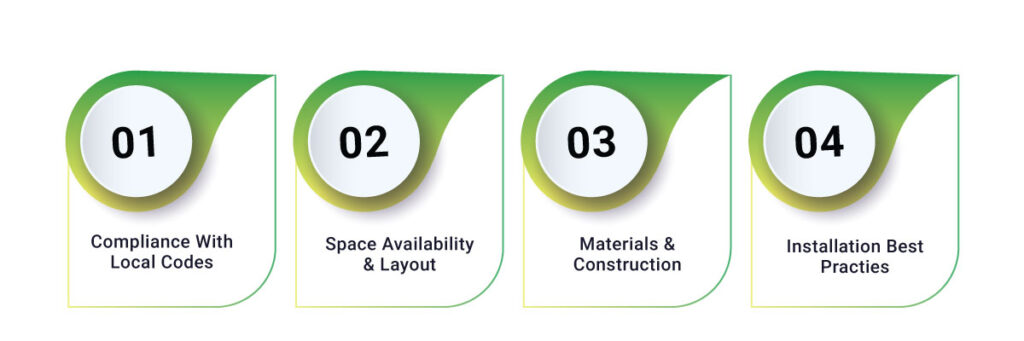
Key Design Considerations
1. Compliance with Local Codes
Every jurisdiction has its own plumbing and building code requirements. Designers must ensure that:
- Materials and installation methods meet local standards.
- Maintenance schedules and inspection records align with regulatory mandates.
2. Space Availability & Layout
Grease interceptors should be located near FOG (Fats, Oils, and Grease) sources for efficiency. Designers must also consider:
- Ease of access for cleaning and inspection.
- Space limitations in urban or retrofit projects.
- Safety and convenience for maintenance teams.
3. Materials & Construction
Interceptor materials must be durable and corrosion-resistant. Common choices include:
- Concrete or Fiberglass: Primarily used for large in-ground units.
- Stainless Steel: Ideal for above-ground or smaller point-of-use units due to its high resistance to acidic kitchen waste.
4. Installation Best Practices
Proper installation ensures long-term reliability. Key steps include:
- Correct pipe slope to allow smooth flow without stagnation.
- Adequate venting to prevent hydraulic lock and siphoning.
- Easy access for cleaning and professional pump-out services.
The Importance of Proper Sizing
A grease interceptor must be correctly sized to handle peak kitchen demand. Undersized units risk frequent clogs and “pass-through,” while oversized ones waste money and space.
Benefits of Accurate Sizing:
- Efficient grease removal and cleaner effluent.
- Reduced maintenance frequency.
- Cost savings on installation and upkeep.
- Future-proofing for increased FOG loads.
Local plumbing codes typically provide formulas for sizing based on wastewater flow rates (GPM) or the total volume of connected fixtures.
Types of Grease Interceptors
1. Passive (Gravity-Fed) Interceptors
- Simple, low-maintenance design using baffles to slow water flow.
- No moving parts, making them cost-effective initially.
- Require larger space and frequent manual cleaning or professional pumping.
2. Automatic Grease Recovery Units (AGRUs)
- Mechanically skim grease into storage containers on a programmed schedule.
- Maintain high efficiency as grease does not accumulate in the main tank.
- Higher upfront cost and require an electrical connection.
3. In-Ground Interceptors
- Installed below grade, ideal for high-capacity kitchens.
- Save space above ground with a discreet design.
- Require excavation and specific access covers for pump trucks.
Best Practices for Grease Interceptor Systems
To maximize performance and compliance:
- Schedule Regular Cleaning: Often mandated by the “25% Rule” (clean when 25% of the tank is full of solids/grease).
- Point-of-Use Installation: Install as close to grease sources as possible to minimize buildup in internal piping.
- Staff Training: Educate kitchen staff to “scrape, don’t rinse” to reduce the FOG load entering the system.
The Role of Proper Venting
Venting is a crucial but often overlooked aspect of system performance. A well-designed venting system ensures:
- Smooth wastewater flow without hydraulic lock.
- Effective odor control by directing gases outside the building.
- Safe regulation of system pressure to prevent siphoning of the trap seal.
Future Trends in Grease Waste Management
Grease waste systems are evolving with:
- IoT Monitoring: Sensors provide real-time alerts for grease levels and flow rates.
- Sustainability: Converting recovered high-quality grease from AGRUs into biofuels.
Conclusion
Grease waste design requires careful consideration of local codes, sizing, and venting strategies. By selecting the right equipment and following best practices, food-service facilities can stay compliant, prevent costly plumbing failures, and protect the environment.