Creating Safe, Reliable and Future-Ready Power Infrastructure for Hospitals and Medical Facilities.
Designing electrical systems for healthcare facilities is very different from typical commercial buildings. Hospitals depend on continuous power for life-saving equipment, critical operations and patient comfort. Even a momentary power interruption can affect diagnosis, treatment or emergency care.
At IMEP Engineering, we follow a comprehensive design approach built on safety, reliability and long-term flexibility. This detailed guide explains the key considerations that drive successful electrical design for healthcare environments.
1. Ensuring Patient Safety Through Code Compliance
Healthcare electrical design is governed by strict codes because patient safety directly depends on electrical reliability.
Key Codes and Standards
- NFPA 70 (National Electrical Code)
- NFPA 99 (Health Care Facilities Code)
- NEC Article 517 – Healthcare Facilities
- Local/state health authority regulations
- Facility guidelines for healthcare construction (FGI)
These standards define requirements for grounding, emergency systems, wiring separation, power for medical equipment and design of critical spaces.
Why This Matters
- Ensures shock protection for patients and caregivers
- Prevents equipment malfunctions due to poor grounding
- Keeps life-safety systems compliant and reliable
- Reduces inspection delays and rework during construction
Easy Example
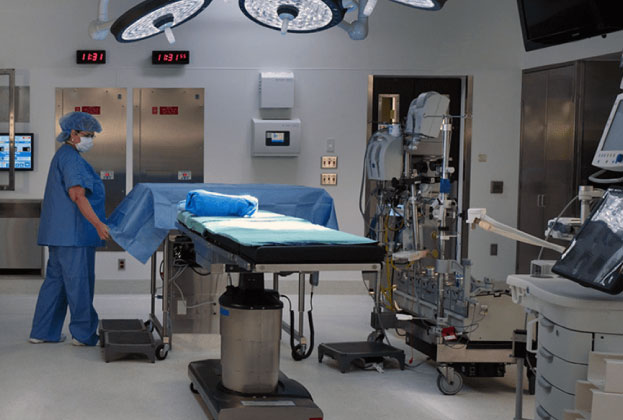
In operating rooms, isolated power systems are required in many regions to protect sensitive electrosurgical devices from sudden voltage drops or electrical faults. A compliant design ensures a safe environment during surgeries.
2. Reliable and Redundant Power Systems
Hospitals operate 24×7. Spaces like ICUs, ORs, ERs and imaging rooms cannot afford even a second of downtime.
Core Elements of a Reliable Power Strategy
- Emergency generators sized for full critical load
- Automatic Transfer Switches (ATS) for quick switchover
- UPS systems for equipment sensitive to voltage fluctuations
- Segregated power distribution (Life-safety, Critical, Equipment)
What Redundancy Looks Like
- Dual feeders
- Parallel generators
- UPS for imaging equipment
- Spare capacity in switchboards
3. Designing for Advanced Medical Equipment
Modern healthcare depends heavily on high-demand medical equipment. Each device has unique electrical requirements.
High-Load Equipment Examples
- MRI, CT, PET, X-ray
- Cath lab machines
- Surgical robots
- Linear accelerators
- Ventilators and dialysis units
Key Electrical Design Needs
- Dedicated circuits and panels
- Clean and stable power quality
- Harmonic mitigation for imaging suites
- Shielding and grounding coordination
- Vendor coordination for exact load and installation data
4. Lighting That Supports Healing, Accuracy and Efficiency
Lighting affects patient comfort, staff productivity and energy consumption.
Lighting Goals for Healthcare
- Clear visibility for clinical tasks
- Comfortable lighting for patients
- Efficient energy performance
- Support for natural circadian rhythms
Design Considerations
- Procedure rooms: high-intensity, shadow-free illumination
- Patient rooms: low-glare lighting with bedside controls
- Corridors: indirect lighting to reduce strain
- Smart lighting controls: daylight sensors, dimming, occupancy sensors
5. Integration of Low-Voltage and Smart Building Systems
Hospitals rely on several interconnected systems that support patient monitoring, communication and security.
Key Low-Voltage Systems
- IT and data networks
- Nurse call
- CCTV and security
- Access control
- Public address system
- Fire alarm
- Building management system (BMS)
- Real-time location system (RTLS)
6. Flexibility for Growth and Future Technology
Healthcare environments evolve quickly. A future-ready electrical design saves time and money.
Strategies for Future Flexibility
- Spare capacity in panels, bus ducts and switchgear
- Provisions for additional transformers or UPS units
- Dedicated pathways for new cabling
- Modular electrical room layouts
- Space for future imaging or diagnostic equipment
- Scalable lighting and BMS controls
7. Energy Efficiency and Sustainability in Healthcare
Medical facilities consume more energy than typical buildings. Smart electrical design helps reduce operating costs and environmental impact.
Energy-Efficient Electrical Strategies
- LED lighting with daylight and occupancy sensors
- High-efficiency motors and transformers
- Load management and peak-demand control
- Energy-efficient HVAC controls
- Power-factor correction systems
- Renewable energy integration
Case Study: Electrical Design Optimization for a 220-Bed Hospital Expansion Challenges
- Adding MRI and CT rooms in congested areas
- Maintaining hospital operations during construction
- Upgrading emergency power systems
- Integrating new low-voltage systems with old infrastructure
IMEP Approach
- Designed a redundant power system with 30 percent spare capacity
- Created new cable pathways without interrupting patient care
- Installed a modern ATS setup integrated with existing generators
- Planned LED and circadian lighting for patient areas
- Coordinated with OEM vendors to finalize load requirements
Results
- Zero downtime during execution
- 18 percent improvement in energy efficiency
- Smooth integration of all new diagnostic equipment
- Future-ready system with room for expansion
Conclusion
Electrical design for healthcare facilities requires a thoughtful balance of safety, performance and future growth. IMEP Engineering delivers electrical designs that support patient care, improve operational efficiency and prepare facilities for future innovation.