

Design revisions are one of the most common causes of project delays, budget overruns, and permit approval challenges in the building industry. While revisions can occur for many reasons, late MEP coordination remains a leading contributor to costly redesigns across architectural, commercial, residential, healthcare, educational, and mixed-use projects.
When mechanical, electrical, and plumbing systems are integrated too late in the design process, conflicts often emerge between building systems and architectural elements. These issues can trigger multiple rounds of revisions, delay permit submissions, increase construction costs, and create unnecessary pressure on project teams.
For architects, contractors, and developers, understanding how to coordinate MEP systems early can significantly improve project outcomes. This article explores the common causes of design revisions related to MEP coordination and outlines practical strategies to prevent them.
What Is MEP Coordination?
MEP coordination is the process of integrating mechanical, electrical, plumbing, and fire protection systems with architectural and structural designs. The objective is to ensure that all building systems fit within the available space, comply with applicable codes, and function efficiently without conflicting with other disciplines.
Effective coordination involves collaboration among architects, structural engineers, MEP engineers, contractors, and BIM specialists throughout the design process.
When coordination occurs early, teams can identify potential issues before construction begins. When coordination is delayed, design conflicts often become expensive problems requiring significant revisions.
Why Late MEP Coordination Causes Design Revisions
Many projects begin with a strong architectural vision but postpone detailed engineering coordination until later design stages. While this approach may seem efficient initially, it often creates challenges as building systems become more defined.
Late MEP coordination commonly results in:
- HVAC ductwork conflicting with structural beams
- Electrical rooms being undersized
- Plumbing routes interfering with architectural layouts
- Ceiling space becoming overcrowded
- Equipment lacking sufficient maintenance clearances
- Fire protection systems conflicting with other services
- Energy code compliance issues discovered during permit review
When these conflicts emerge after design development or construction documentation, teams must revise drawings, update calculations, and resubmit permit packages.
The result is additional project costs, schedule delays, and increased workload for all stakeholders.
Common Design Revisions Caused by Poor MEP Coordination
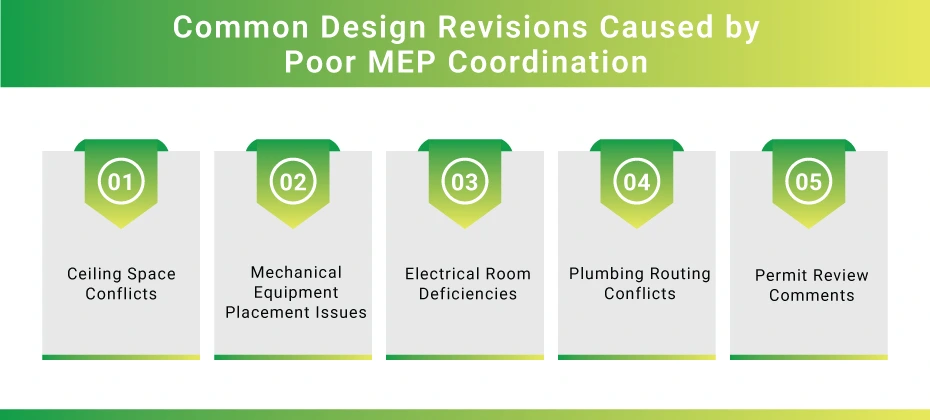
1. Ceiling Space Conflicts
Modern buildings contain multiple systems competing for limited ceiling space. HVAC ducts, piping, cable trays, lighting fixtures, fire sprinklers, and structural elements all require careful planning.
Without early coordination, teams may discover that the available ceiling plenum cannot accommodate all required systems.
This often forces architects to:
- Increase floor-to-floor heights
- Lower finished ceilings
- Redesign interior layouts
- Modify architectural features
These revisions can significantly affect project schedules and budgets.
2. Mechanical Equipment Placement Issues
Mechanical equipment requires adequate space for installation, operation, and maintenance.
When equipment locations are not coordinated early, problems may arise such as:
- Insufficient mechanical room sizes
- Inadequate access clearances
- Conflicts with structural components
- Roof equipment overcrowding
Correcting these issues frequently requires architectural redesign and structural modifications.
3. Electrical Room Deficiencies
Electrical rooms must meet specific code requirements for equipment clearances, working spaces, and future maintenance access.
Late coordination may reveal:
- Undersized electrical rooms
- Missing equipment clearances
- Improper equipment arrangements
- Inadequate pathways for feeders and conduits
Addressing these deficiencies often involves floor plan revisions and updated permit drawings.
4. Plumbing Routing Conflicts
Plumbing systems require proper slopes and routing pathways that can impact architectural layouts and structural framing.
Without early planning, teams may encounter:
- Drainage conflicts with beams
- Insufficient shaft space
- Fixture relocation requirements
- Pipe routing challenges
These issues frequently result in redesign efforts during later project phases.
5. Permit Review Comments
Building departments carefully review MEP systems for compliance with applicable codes and standards.
When coordination is incomplete, permit reviewers may identify:
- Missing calculations
- Inconsistent drawings
- Code compliance deficiencies
- Coordination discrepancies
These comments often require revisions and permit resubmissions, extending approval timelines.
The Benefits of Early MEP Coordination
Early coordination helps project teams identify and resolve issues before they become expensive design changes.
Key benefits include:
Reduced Design Revisions
Potential conflicts can be addressed during design development rather than during permit review or construction.
Faster Permit Approvals
Coordinated drawings are generally more complete and consistent, reducing the likelihood of permit review comments.
Improved Construction Efficiency
Contractors receive clearer documentation with fewer conflicts, reducing RFIs and change orders.
Better Budget Control
Early issue resolution minimizes costly redesign efforts and construction modifications.
Enhanced Project Scheduling
Projects move more efficiently through design, permitting, and construction phases when coordination challenges are addressed proactively.
Best Practices to Avoid Design Revisions
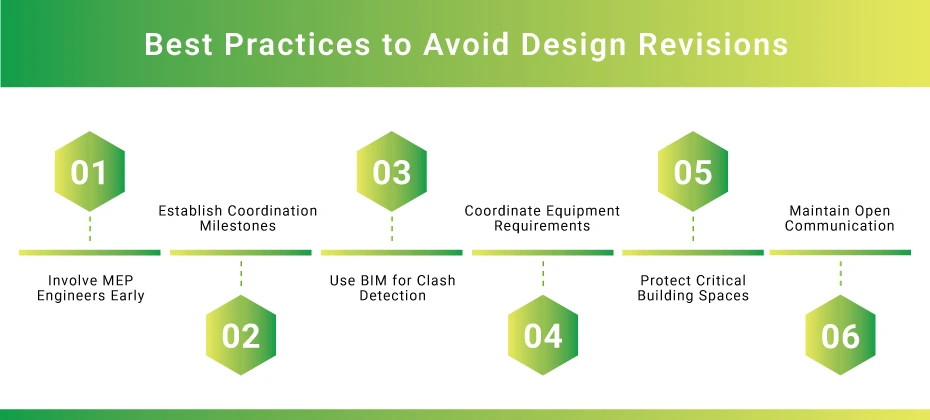
Involve MEP Engineers Early
One of the most effective ways to prevent design revisions is to engage MEP engineers during the conceptual and schematic design phases.
Early involvement allows engineers to:
- Evaluate system requirements
- Identify space needs
- Assess code compliance requirements
- Provide design recommendations
This collaborative approach helps avoid major changes later in the project.
Establish Coordination Milestones
Successful projects typically include formal coordination reviews at key design stages.
Recommended milestones include:
- Schematic Design (SD)
- Design Development (DD)
- 50% Construction Documents
- 90% Construction Documents
Regular reviews help identify conflicts before they become significant problems.
Use BIM for Clash Detection
Building Information Modeling (BIM) has become an essential tool for modern project coordination.
BIM enables teams to:
- Visualize building systems in 3D
- Detect clashes between disciplines
- Validate equipment clearances
- Improve coordination accuracy
Identifying conflicts digitally is significantly less expensive than resolving them during construction.
Coordinate Equipment Requirements
Major equipment should be identified and coordinated early in the design process.
Key considerations include:
- Dimensions
- Access requirements
- Maintenance clearances
- Structural support needs
- Utility connections
Proper planning reduces the likelihood of future architectural revisions.
Protect Critical Building Spaces
Certain areas require special attention during coordination, including:
- Mechanical rooms
- Electrical rooms
- Plumbing shafts
- Telecom rooms
- Equipment yards
These spaces should be established early and protected throughout design development.
Maintain Open Communication
Coordination is not solely a technical process. Effective communication among project stakeholders is equally important.
Regular meetings between architects, engineers, contractors, and owners help ensure that design decisions remain aligned throughout the project.
Open communication also allows teams to identify emerging issues before they affect project deliverables.
The Role of BIM Coordination in Preventing Revisions
BIM coordination has transformed the way project teams manage design integration.
Through coordinated 3D models, stakeholders can evaluate how building systems interact before construction begins.
Benefits of BIM coordination include:
- Early clash detection
- Improved visualization
- Better decision-making
- Enhanced design accuracy
- Reduced construction conflicts
For complex projects, BIM coordination often provides one of the highest returns on investment by reducing redesign efforts and minimizing field issues.
Signs Your Project May Need Additional MEP Coordination
Project teams should watch for warning signs that indicate coordination challenges may be developing.
Common indicators include:
- Frequent design changes
- Increasing permit review comments
- Repeated coordination meetings addressing the same issues
- Mechanical room space concerns
- Ceiling congestion
- Growing numbers of RFIs during construction
Addressing these signs early can help prevent larger problems later.
Conclusion
Late MEP coordination is one of the most preventable causes of design revisions in building projects. When mechanical, electrical, and plumbing systems are integrated too late, conflicts often emerge that require redesign, delay permit approvals, and increase project costs.
By involving MEP engineers early, establishing coordination milestones, leveraging BIM technology, and maintaining clear communication among stakeholders, project teams can significantly reduce design revisions and improve project delivery outcomes.
For architecture firms, contractors, and developers, proactive MEP coordination is not simply a design best practice, it is a critical strategy for minimizing risk, improving efficiency, and delivering successful projects on time and within budget.