

Modern building projects depend heavily on coordination between architects and MEP (Mechanical, Electrical, and Plumbing) engineers. While architects shape the overall vision and spatial design, MEP engineers ensure that building systems are feasible, code-compliant, and efficiently integrated into the design.
Understanding when and how MEP engineers contribute during different design phases especially schematic design (SD) and construction documents (CD) can significantly reduce redesign cycles, RFIs, and construction delays.
This guide explains the role of MEP engineers across both phases and how early coordination improves project outcomes for architectural firms.
What Is Schematic Design vs. Construction Documents?
Before comparing roles, it’s important to understand the two key design phases in a typical U.S. building project.
Schematic Design (SD)
Schematic design is the early conceptual phase where:
- Overall building layout is defined
- Space planning is developed
- Initial design intent is established
- Major systems are considered at a high level
At this stage, drawings are not highly detailed but set the foundation for all technical decisions.
Construction Documents (CD)
Construction documents are the detailed design phase where:
- Final technical drawings are prepared
- All systems are fully coordinated
- Code compliance is finalized
- Permit sets are submitted for approval
This is the stage where design becomes buildable.
Role of MEP Engineers in Schematic Design (SD)
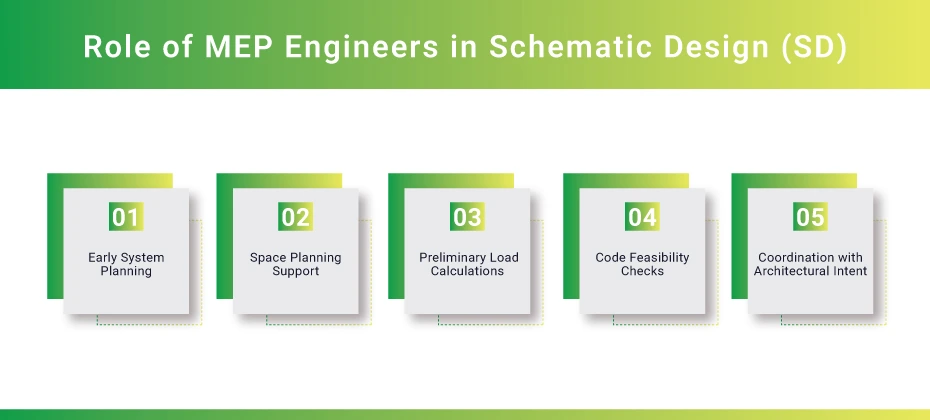
During schematic design, MEP engineers act as early-stage design advisors, helping architects make informed decisions that shape the entire building’s performance.
1. Early System Planning
MEP engineers evaluate:
- HVAC system concepts (centralized vs. decentralized systems)
- Electrical service requirements
- Plumbing stack and riser strategies
This ensures that the architectural layout can realistically support building systems.
2. Space Planning Support
MEP coordination helps define:
- Mechanical room sizes
- Shaft locations
- Ceiling space requirements
- Equipment placement constraints
Early input prevents spatial conflicts later in the project.
3. Preliminary Load Calculations
Engineers estimate:
- Heating and cooling loads
- Electrical demand
- Water supply and drainage requirements
These calculations help architects avoid undersized infrastructure planning.
4. Code Feasibility Checks
MEP engineers identify early compliance considerations such as:
- Ventilation requirements (ASHRAE standards)
- Electrical safety codes (NEC)
- Plumbing code constraints (IPC)
This reduces the risk of major redesigns during permit review.
5. Coordination with Architectural Intent
At SD stage, MEP engineers align system concepts with:
-
- Architectural aesthetics
- Ceiling heights
- Structural grid constraints
The goal is integration not retrofitting.
Role of MEP Engineers in Construction Documents (CD)
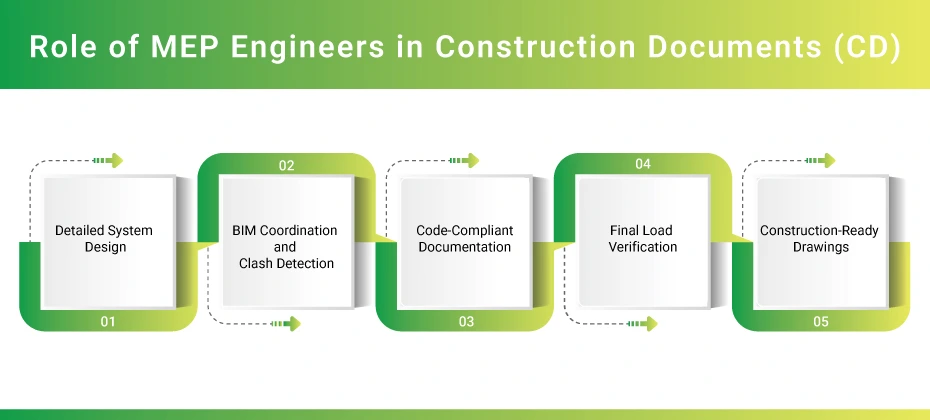
In the construction document phase, MEP engineers shift from conceptual advisors to detailed system designers responsible for producing fully coordinated, permit-ready drawings.
1. Detailed System Design
MEP engineers finalize:
- HVAC duct layouts and sizing
- Electrical panel schedules and circuiting
- Plumbing piping layouts and slopes
All systems are fully defined for construction.
2. BIM Coordination and Clash Detection
Using tools like Revit, engineers coordinate with architects to:
- Eliminate spatial conflicts
- Resolve duct-beam clashes
- Align ceiling and structural systems
This step is critical for reducing field changes.
3. Code-Compliant Documentation
Construction documents must meet:
- Local building codes
- Energy efficiency requirements
- Fire safety regulations
MEP engineers ensure drawings are ready for permit submission and approval.
4. Final Load Verification
All earlier assumptions are validated with:
- Final architectural dimensions
- Updated occupancy data
- Structural coordination inputs
This ensures accuracy before construction begins.
5. Construction-Ready Drawings
MEP deliverables in CD phase include:
- Detailed plans and riser diagrams
- Schedules and equipment specifications
- Installation details for contractors
These drawings guide actual construction on site.
Key Differences: SD vs CD MEP Engineering Role
| Aspect | Schematic Design | Construction Documents |
| Purpose | Concept development | Final technical design |
| Level of detail | Low to moderate | High and precise |
| Focus | Feasibility & planning | Buildability & compliance |
| Output | System concepts | Permit-ready drawings |
| Coordination | Early spatial alignment | Full BIM clash resolution |
Why Early MEP Involvement Matters for Architects
One of the most common challenges in architectural projects is late-stage design changes caused by MEP constraints.
Early collaboration helps architects:
- Avoid redesigning ceiling layouts
- Prevent mechanical room resizing
- Reduce permit review rejections
- Improve coordination with consultants
- Maintain design intent without compromise
In many cases, early MEP input can significantly reduce project delays and construction costs.
Common Problems When MEP Is Not Involved Early
When MEP engineers are brought in too late, projects often face:
- Ceiling height conflicts due to duct routing
- Undersized mechanical or electrical rooms
- Structural clashes with HVAC systems
- Code violations discovered during permitting
- Increased RFIs during construction
These issues typically result in redesign cycles that could have been avoided in schematic design.
How Architects Benefit from Strong MEP Collaboration
Architectural firms that work closely with experienced MEP engineers gain:
1. Faster Design Cycles
Fewer revisions between SD and CD phases.
2. Better Design Confidence
Early validation of building systems.
3. Reduced Construction Risk
Fewer field changes and RFIs.
4. Stronger Client Trust
More predictable timelines and budgets.
When Should Architects Engage MEP Engineers?
The ideal engagement timeline is:
-
- Concept Design Stage: Initial system strategy
- Schematic Design: Space planning + feasibility
- Design Development: Full system coordination
- Construction Documents: Final detailing + permit set
Early engagement consistently produces better outcomes.
Conclusion
MEP engineers play a critical role in both schematic design and construction document phases, but their contribution evolves significantly:
In schematic design, they help shape feasibility and spatial planning.
In construction documents, they ensure precision, compliance, and constructability.
For architectural firms, early and continuous collaboration with MEP engineers is not just a technical advantage, it is a project success strategy.