

Getting permit comments is a normal part of the building approval process. However, when projects receive multiple rounds of comments, the issue often goes beyond routine plan review. Repeated permit comments can delay project schedules, increase design costs, frustrate clients, and create unnecessary pressure on project teams.
For architecture firms, recurring permit review comments are often a sign of deeper coordination, documentation, or compliance challenges. Understanding the root causes can help firms reduce revisions, improve submission quality, and move projects through approval more efficiently.
In this article, we’ll explore the most common reasons projects receive repeated permit comments and the practical steps architecture firms can take to minimize them.
The Real Cost of Repeated Permit Comments
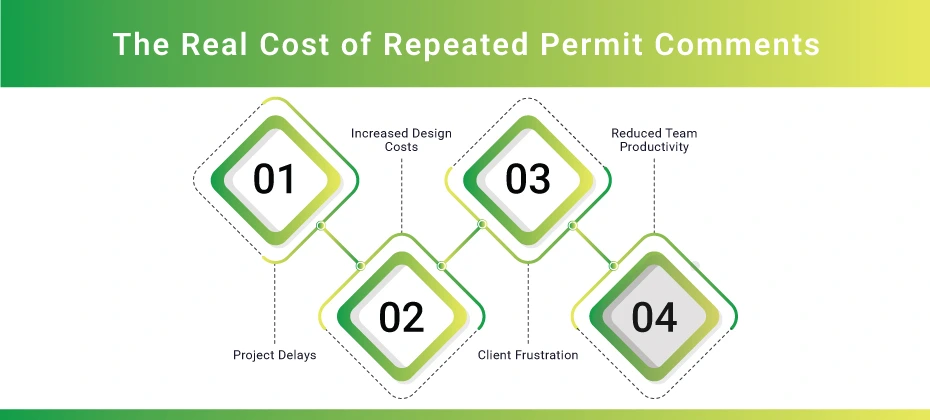
Many project teams view permit comments as a minor administrative hurdle. In reality, each additional review cycle can have significant consequences.
Project Delays
Every resubmission adds time to the approval process. Depending on the jurisdiction and project complexity, even a single additional review cycle can delay construction start dates by several weeks.
Increased Design Costs
Addressing permit comments requires architects, engineers, and consultants to revise drawings, update calculations, and coordinate changes. These additional hours can quickly impact project profitability.
Client Frustration
Owners and developers expect projects to progress according to schedule. Repeated permit comments may create concerns about project management, coordination, and overall team performance.
Reduced Team Productivity
Time spent responding to avoidable permit comments is time that cannot be invested in new projects, design development, or client service.
The good news is that many recurring permit comments can be prevented before submission.
6 Types Projects Receive Repeated Permit Comments
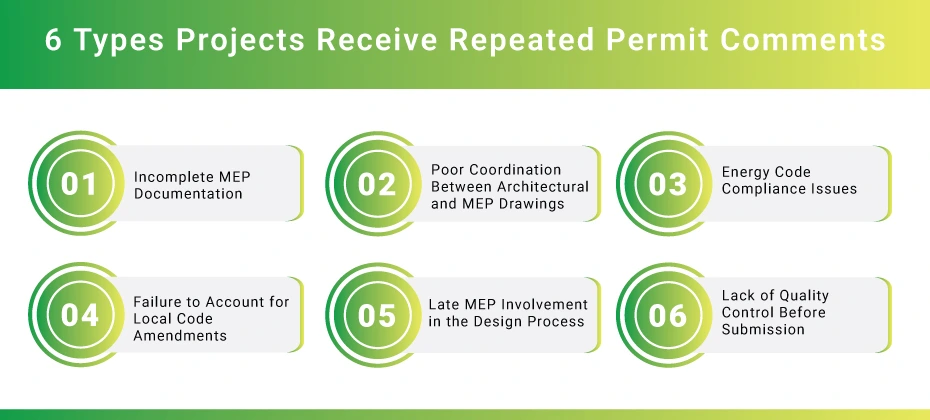
1. Incomplete MEP Documentation
One of the most common reasons for repeated permit comments is incomplete mechanical, electrical, and plumbing documentation.
Plan reviewers must verify that building systems comply with applicable codes and regulations. When required information is missing, reviewers have no choice but to issue comments.
Common examples include:
- Missing HVAC load calculations
- Incomplete ventilation calculations
- Missing equipment schedules
- Incomplete plumbing fixture counts
- Missing electrical load calculations
- Inadequate panel schedules
When critical information is omitted, permit reviewers often request clarification, resulting in additional review cycles.
How to Prevent It
Before submission, verify that all required calculations, schedules, and supporting documentation are included in the permit package.
2. Poor Coordination Between Architectural and MEP Drawings
Coordination issues remain one of the leading causes of permit review comments.
Architectural and MEP drawings should tell the same story. Unfortunately, discrepancies between disciplines are common, especially on fast-paced projects.
Examples include:
- Different occupancy loads shown on architectural and MEP sheets
- Mechanical equipment conflicting with architectural layouts
- Inconsistent room names and numbering
- Ceiling space conflicts
- Missing equipment clearances
When reviewers identify inconsistencies, they often request revisions from multiple disciplines.
How to Prevent It
Conduct interdisciplinary coordination reviews before submission. Regular communication between architects and engineers can help identify conflicts early and reduce correction cycles.
3. Energy Code Compliance Issues
Energy code requirements have become increasingly important in permit reviews.
Many projects receive comments because energy compliance documentation is incomplete, inconsistent, or does not align with the submitted design.
Common issues include:
- Incorrect lighting power density calculations
- Missing energy compliance forms
- Inconsistent HVAC efficiency information
- Building envelope coordination issues
- Missing control sequences
Because energy codes continue to evolve, design teams must ensure compliance requirements are addressed from the earliest project stages.
How to Prevent It
Involve MEP engineers early in the design process and verify energy code compliance before permit submission.
4. Failure to Account for Local Code Amendments
Many design teams are familiar with national model codes, but local jurisdictions often adopt amendments that introduce additional requirements.
A design that meets national code standards may still receive permit comments if local regulations are overlooked.
Examples may include:
- Local ventilation requirements
- Enhanced energy standards
- Additional accessibility requirements
- Fire protection modifications
- Jurisdiction-specific documentation requirements
How to Prevent It
Research local amendments at project kickoff and incorporate them into the design process from the beginning.
5. Late MEP Involvement in the Design Process
In some projects, MEP engineers are brought into the project after major architectural decisions have already been made.
While this approach may appear efficient initially, it often creates challenges later in the process.
Common consequences include:
- Mechanical rooms that are undersized
- Inadequate equipment access
- Limited routing options for ductwork and piping
- Electrical service conflicts
- Significant redesign during permit review
The earlier MEP engineers are involved, the easier it becomes to address system requirements proactively.
How to Prevent It
Engage MEP consultants during schematic design whenever possible. Early collaboration reduces downstream revisions and improves overall project coordination.
6. Lack of Quality Control Before Submission
Many permit comments originate from simple errors that could have been identified through a structured quality review.
Common examples include:
- Missing notes
- Incorrect references
- Inconsistent sheet information
- Outdated drawing revisions
- Coordination discrepancies
Even highly experienced teams can overlook issues when working under tight deadlines.
How to Prevent It
Implement a formal quality assurance and quality control (QA/QC) process before every permit submission.
A fresh review by senior team members often identifies issues that project teams may miss.
A Simple Pre-Permit Review Checklist
Before submitting permit drawings, architecture firms should verify the following:
- Architectural and MEP drawings are fully coordinated
- HVAC, plumbing, and electrical calculations are complete
- Equipment schedules are accurate and consistent
- Energy compliance documentation is included
- Local code amendments have been reviewed
- BIM coordination reviews have been completed
- Accessibility requirements have been verified
- Quality control reviews have been performed
- Permit submission requirements are complete
- A structured checklist can significantly reduce the likelihood of avoidable permit comments.
How a Strong MEP Partner Can Help
Reducing permit comments is not simply about satisfying code requirements. It is about creating a coordinated, complete, and constructible design package.
An experienced MEP engineering team like IMEP Engineering can help architecture firms:
- Improve interdisciplinary coordination
- Identify compliance issues early
- Reduce permit review cycles
- Improve drawing quality
- Minimize redesign efforts
- Support smoother project delivery
The most successful projects address coordination and compliance challenges long before drawings reach the building department.
Conclusion
Repeated permit comments are rarely caused by a single issue. In most cases, they result from a combination of incomplete documentation, coordination gaps, code compliance challenges, and insufficient quality control.
For architecture firms, reducing permit comments begins with a proactive approach to project coordination and engineering collaboration. Early MEP involvement, thorough quality reviews, and strong communication between disciplines can significantly improve submission quality and reduce costly delays.
By addressing these issues before permit submission, firms can shorten approval timelines, improve client satisfaction, and keep projects moving forward with greater confidence.