

The success of modern construction projects in the United States depends heavily on collaboration between architecture firms and MEP engineering partners. As buildings become more technologically advanced, energy-efficient, and regulation-driven, architects need more than basic engineering support; they need strategic MEP partners who can contribute throughout the entire project lifecycle.
From schematic design to construction administration, the right MEP partner helps architecture firms deliver projects that are functional, efficient, code-compliant, and visually aligned with the original design vision.
Here’s what U.S. architecture firms should truly expect from their MEP partners.
Main Technical Capabilities Architects Must Insist On
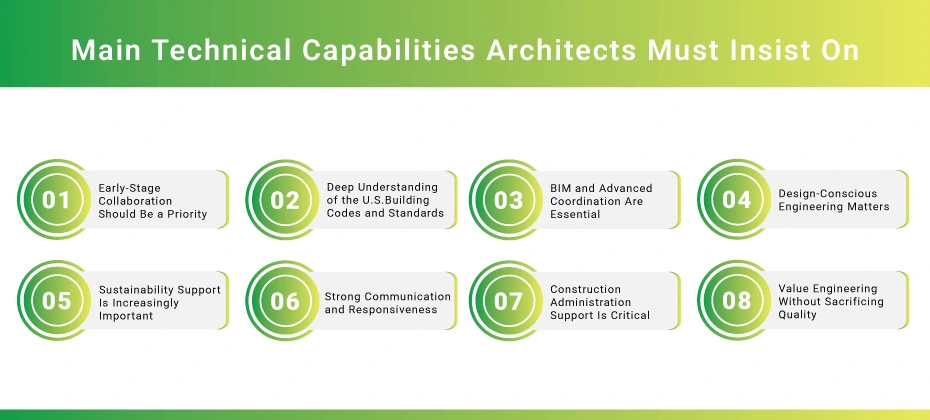
Early-Stage Collaboration Should Be a Priority
One of the biggest mistakes in project delivery is involving MEP consultants too late in the process. Strong MEP partners contribute value from the earliest design phases.
When MEP engineers are engaged during schematic or conceptual design, architects can:
- Avoid spatial conflicts later
- Improve equipment placement planning
- Coordinate ceiling heights and utility routes early
- Reduce redesigns during construction documentation
Early collaboration leads to smoother workflows and fewer surprises during execution. Instead of reacting to problems later, architects and engineers can solve them together from the beginning.
Deep Understanding of the U.S. Building Codes and Standards
Architecture firms in the United States work within a highly regulated construction environment. MEP partners must have strong knowledge of:
- International Building Code (IBC)
- ASHRAE standards
- NFPA regulations
- Local municipal codes
- Energy compliance requirements
- Accessibility and safety standards
An experienced MEP engineering team helps architects navigate these requirements while maintaining design intent.
Without proper code coordination, projects may face:
- Permit delays
- Redesign requests
- Increased construction costs
- Compliance risks
Reliable MEP partners help ensure smoother approvals and fewer regulatory complications.
BIM and Advanced Coordination Are Essential
Building Information Modeling (BIM) is no longer optional for most U.S. projects. Architecture firms should expect their MEP partners to be proficient in:
- Revit modeling
- Clash detection
- Coordinated BIM workflows
- Multi-disciplinary collaboration
- Construction-ready documentation
Effective BIM coordination helps identify conflicts between systems before construction begins. This reduces:
- RFIs
- Field clashes
- Rework
- Project delays
For architects, this means better project efficiency and more confidence during construction.
Design-Conscious Engineering Matters
Architects invest significant effort into creating spaces that are visually compelling and functional. MEP systems should support that vision — not compromise it.
A strong MEP partner understands how to integrate engineering systems while respecting:
- Interior aesthetics
- Open ceiling concepts
- Facade design
- Space planning
- Occupant experience
Whether it’s HVAC duct routing, lighting coordination, or equipment placement, architects need engineering teams that think beyond technical calculations and consider the overall design outcome.
The best MEP partnerships balance engineering practicality with architectural creativity.
Sustainability Support Is Increasingly Important
Sustainability has become a major priority in the U.S. construction industry. Clients increasingly expect buildings that are energy-efficient, environmentally responsible, and cost-effective to operate.
Architecture firms should expect MEP partners to support:
- LEED certification goals
- Net-zero energy strategies
- Energy modeling
- High-efficiency HVAC systems
- Sustainable lighting design
- Water conservation strategies
MEP systems play a critical role in overall building performance. Engineering partners who understand sustainable design can help architects deliver projects that meet both environmental and client expectations.
Strong Communication and Responsiveness
Even technically skilled engineering teams can create project challenges if communication is weak.
Architecture firms need MEP partners who are:
- Responsive to project updates
- Clear in their communication
- Proactive during coordination
- Reliable with deadlines
- Available during critical project phases
Fast-moving U.S. construction schedules require efficient collaboration between teams, consultants, and contractors. Delayed responses or unclear coordination often lead to avoidable project slowdowns.
Strong communication helps projects stay organized, aligned, and on schedule.
Construction Administration Support Is Critical
Project success doesn’t end when design drawings are issued. During construction, unexpected issues frequently arise that require engineering input.
Architecture firms should expect MEP partners to provide:
- RFI responses
- Shop drawing reviews
- Site coordination support
- Contractor clarifications
- Issue resolution during installation
Responsive construction-phase support helps reduce confusion in the field and keeps projects moving efficiently.
MEP teams that remain actively involved during construction become valuable problem-solving partners rather than disconnected consultants.
Value Engineering Without Sacrificing Quality
Budget pressure is common across nearly every construction project in the United States. However, cost reduction should not compromise performance, efficiency, or long-term building value.
Experienced MEP partners help architecture firms by:
- Recommending efficient system alternatives
- Optimizing equipment selection
- Reducing unnecessary complexity
- Supporting lifecycle cost savings
Good value engineering focuses on smart solutions not simply reducing project quality.
Red Flags Architecture Firms Should Watch For
Not all engineering partnerships create positive project outcomes. Architecture firms should be cautious of MEP consultants who:
- Lack U.S. code knowledge
- Deliver incomplete coordination
- Miss deadlines consistently
- Provide limited construction support
- Resist collaborative workflows
- Use outdated BIM processes
These issues often lead to project delays, increased costs, and coordination conflicts.
Selecting the right MEP partner is ultimately about reliability, communication, and technical expertise.
What Great MEP Partnerships Look Like
The strongest MEP partnerships are built on collaboration and shared project goals.
Exceptional MEP partners typically bring:
- Technical expertise
- Proactive coordination
- BIM proficiency
- Code compliance knowledge
- Sustainable design experience
- Construction awareness
- Strong communication habits
More importantly, they understand that successful buildings are created through teamwork not isolated disciplines.
When architects and MEP engineers collaborate effectively, projects become more efficient, more buildable, and more successful overall.
How IMEP Engineering Helps Architecture Firms With MEP Design Support
IMEP Engineering supports architecture firms across the United States by providing reliable, coordinated, and code-compliant MEP design solutions for a wide range of building projects. By working closely with architects from the early design stages, the team helps improve system integration, reduce coordination conflicts, and maintain the overall architectural vision throughout the project lifecycle. Their BIM-based workflows and Revit coordination capabilities help identify clashes before construction begins, minimizing costly revisions and site issues. IMEP Engineering also brings strong knowledge of U.S. building codes, ASHRAE standards, and local compliance requirements, helping architecture firms streamline approvals and reduce project risks. In addition to technical expertise, the company supports sustainable building goals through energy-efficient HVAC, lighting, and plumbing design solutions. During construction, they continue assisting with RFIs, shop drawing reviews, and coordination support to help projects move forward smoothly. Whether it’s commercial, residential, hospitality, healthcare, or mixed-use developments, IMEP Engineering provides scalable MEP support tailored to the needs of modern architecture firms looking for efficient collaboration and dependable project delivery.
Conclusion
Today’s U.S. construction projects demand more than basic engineering support. Architecture firms need MEP partners who can contribute strategically throughout design, coordination, and construction.
From BIM coordination and code compliance to sustainability and construction support, the right MEP partner helps architects deliver projects with greater confidence and efficiency.
Ultimately, successful architecture is not just about design it’s about integrated collaboration that turns vision into reality.